
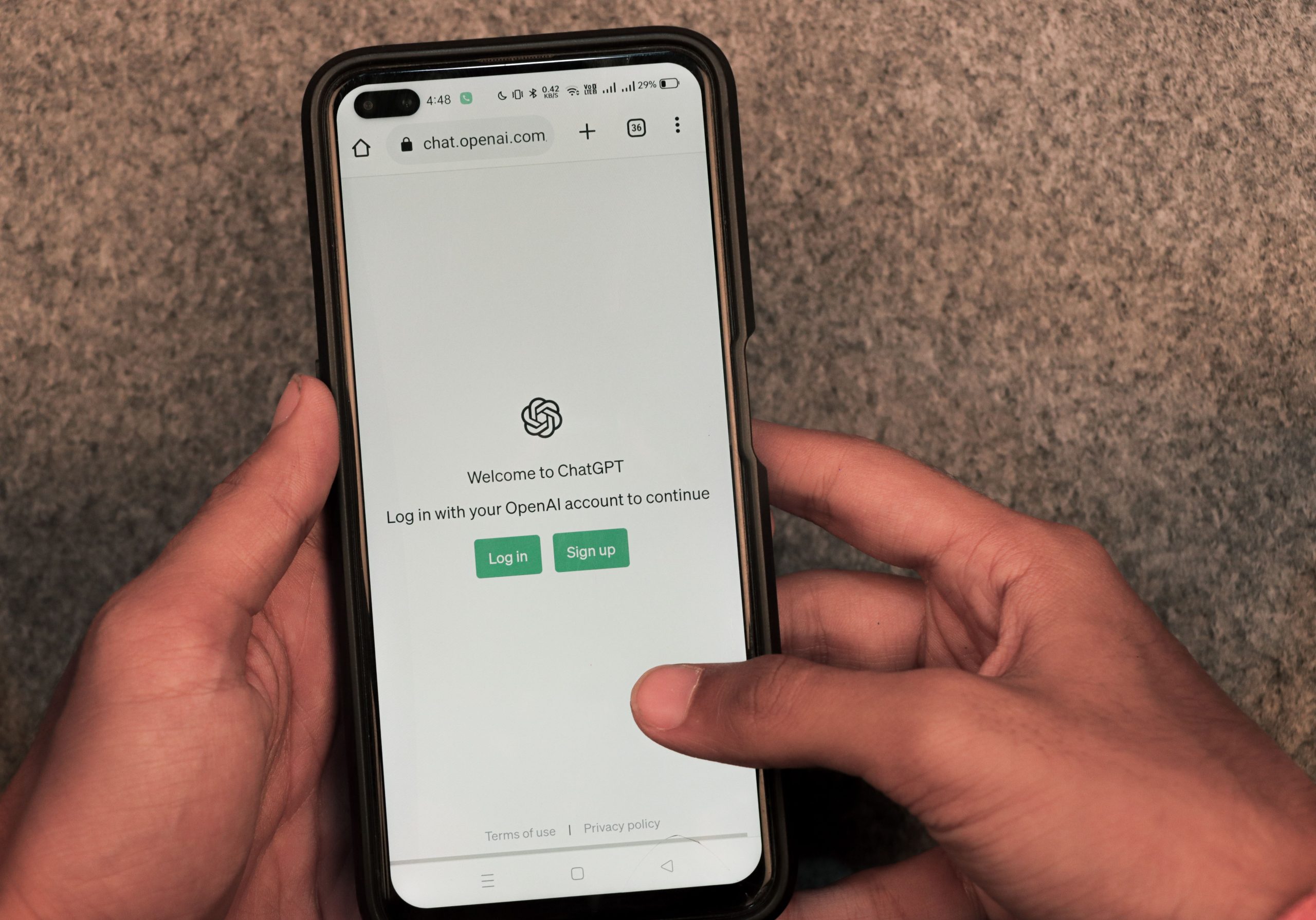
People are using AI tools to discover businesses, compare services and find answers before they ever click through to a website.
That makes a common question for small businesses:
How do I optimize my website for ChatGPT, Gemini and Google AI?
There isn’t a single optimization trick that guarantees your business will be recommended or cited. ChatGPT, Gemini and Google’s AI search features work differently, and their systems and results can change over time.
What you can do is build a website that is easy for search engines and AI systems to crawl, understand and connect with the questions your customers are asking.
That’s where AEO, GEO and strong SEO fundamentals come together.
What does it mean to optimize a website for AI?
Traditional SEO focuses on helping your website appear in search engine results.
AI search adds another layer. Instead of simply presenting a list of links, AI tools can use information from websites and other sources to generate an answer.
For a business, that means your website needs to clearly communicate:
- What your business does
- What services or products you offer
- Who you serve
- Where you operate
- What makes you different
- Why you’re qualified to provide the information or service
The clearer that information is, the easier it is for search engines and AI systems to understand your business.
1. Start with a strong SEO foundation
AEO doesn’t replace SEO.
Google’s guidance for AI search continues to emphasize the same fundamentals that support traditional search, including useful content, crawlable pages, strong technical foundations and content created for people.
Before worrying about AI visibility, make sure your website can actually be found and understood.
That means checking that:
- Important pages are indexable
- Search engines can crawl your site
- Internal links connect related content
- Pages load properly
- Your website works well on mobile devices
- Important information isn’t hidden behind inaccessible elements
- Your site structure makes sense
If Google can’t properly access your website, AI search won’t be able to make much use of the content either.
2. Make your business incredibly clear
This is one of the simplest improvements a small business can make.
Your homepage and core service pages should make it obvious what you do.
Avoid relying on vague statements such as:
Helping businesses succeed through innovative solutions.
Instead, say exactly what you provide and who you provide it for.
For example:
Agency Media is a digital marketing agency serving small and mid-sized businesses in Vancouver and the Fraser Valley. Our services include SEO, website development, digital advertising and video production.
That statement gives search systems much more context.
Your location, services, industry experience and areas of specialization should be clear throughout your website.
3. Create dedicated pages for your services
One of the biggest mistakes businesses make is putting everything on one generic Services page.
If you offer SEO, web development, paid advertising and video production, each service should have its own useful page.
A dedicated service page gives you room to explain:
- What the service is
- Who it’s for
- What problems it solves
- How your process works
- What the service includes
- What questions customers commonly have
- Why your business is qualified to provide it
It also gives AI systems a much clearer piece of content to associate with a specific service.
4. Answer the questions your customers actually ask
This is where AEO becomes especially useful.
Think about what someone might ask ChatGPT, Gemini or Google before they contact a business.
For a marketing agency, that might be:
- How much does SEO cost for a small business?
- How long does SEO take to work?
- Does SEO still matter with AI search?
- How much does a business website cost?
- What should a small business website include?
- How do I get my business to show up in Google AI Overviews?
Create useful content that answers those questions directly.
Don’t create an article simply because a keyword has search volume. Create it because the question represents something your audience actually needs to know.
5. Structure content so answers are easy to find
AI-generated answers often need to extract specific information from a larger page.
Make that easy.
Use descriptive headings, short sections, clear explanations, lists and tables where they genuinely make sense.
If a page answers the question “How long does SEO take?” don’t make readers scroll through 1,500 words before they find the answer.
Answer the question clearly, then provide the supporting detail.
This improves the experience for people and makes important information easier to interpret.
6. Build topical authority
One article about SEO doesn’t make your website an authority on SEO.
A stronger strategy is to build connected content around a subject.
For example, an agency focusing on AI search could create content around:
- Google AI Overviews
- ChatGPT business recommendations
- Gemini visibility
- AEO vs SEO
- AI search audits
- AI-usable content
- Conversational search
- AI visibility tracking
Then link those related articles and service pages together.
This gives your website a stronger overall context around the subject rather than relying on one isolated article.
7. Strengthen your business’s online presence outside your website
AI systems don’t only encounter your business through your homepage.
Your business may appear across directories, review platforms, industry organizations, social profiles, publications and other websites.
Make sure important information is accurate and consistent.
That includes your:
- Business name
- Address
- Phone number
- Website
- Services
- Business description
- Areas served
Google recommends establishing your official business information and maintaining an accurate presence across relevant Google surfaces.
The goal isn’t to submit your business to hundreds of low-quality directories.
Focus on legitimate platforms and sources that are actually relevant to your business.
8. Show evidence of your expertise
AI search needs information it can use to understand whether a business is relevant to a particular question.
Don’t just tell people you’re an expert. Show them.
Useful examples include:
- Case studies
- Original research
- Detailed project examples
- Customer testimonials
- Author information
- Industry certifications
- Awards
- Expert commentary
- Data and examples from your own experience
A page explaining your experience is stronger when it can demonstrate that experience.
9. Use structured data where it makes sense
Structured data can help search engines understand specific types of information on a page.
Depending on your website, that could include information about your organization, products, services, articles, events or other supported content types.
But structured data isn’t an AI visibility shortcut.
Google’s documentation makes clear that structured data doesn’t guarantee that a page will appear in a particular search feature. It should accurately represent the visible content on the page.
Use it to help clarify your content, not to try to manipulate AI results.
10. Make your website worth citing
This is probably the most important mindset shift.
Don’t ask:
“How do I make AI mention my website?”
Ask:
“What information could my website provide that would make it useful in an AI-generated answer?”
That might mean creating the most useful pricing guide in your industry.
It might mean answering a complicated customer question better than competing websites.
It might mean publishing original research or documenting real projects.
AI systems have plenty of generic information to choose from. Your opportunity is to give them something useful, specific and credible.
Can you guarantee that ChatGPT, Gemini or Google will recommend your business?
No.
There is no universal optimization checklist that guarantees inclusion in AI-generated answers.
OpenAI states that there is no way to guarantee top placement in ChatGPT Search. Google similarly notes that meeting its requirements and best practices doesn’t guarantee that a page will be crawled, indexed or displayed in search results.
What you can do is improve the signals that help search systems understand your business and connect your content with relevant questions.
That’s the real goal of AEO and GEO.
How Agency Media helps businesses improve AI search visibility
At Agency Media, our Search Optimization services combine traditional SEO with AEO and GEO to help businesses improve how they appear across search engines and AI-powered search.
Our work can include:
- Website and AI visibility audits
- Keyword and conversational query research
- Content strategy and AI-usable content
- Service page optimization
- Schema and entity optimization
- E-E-A-T improvements
- Google Business Profile and directory consistency
- Competitor visibility tracking
- Ongoing SEO and content analysis
We focus on the entire search experience rather than optimizing for one platform.
Your customers may find you through Google today, ask ChatGPT tomorrow and use another AI search tool next month. Your website needs to give all of them a clear reason to understand your business.
The goal is visibility wherever your customers search
Optimizing for AI doesn’t mean abandoning SEO.
It means building on a strong search foundation and making your website more useful, more understandable and more credible across the ways people now find information.
The businesses that benefit most will be the ones that don’t just try to rank.
They build a digital presence that can answer the question when customers ask.
Learn more about Agency Media’s Search Optimization services →